Current Options
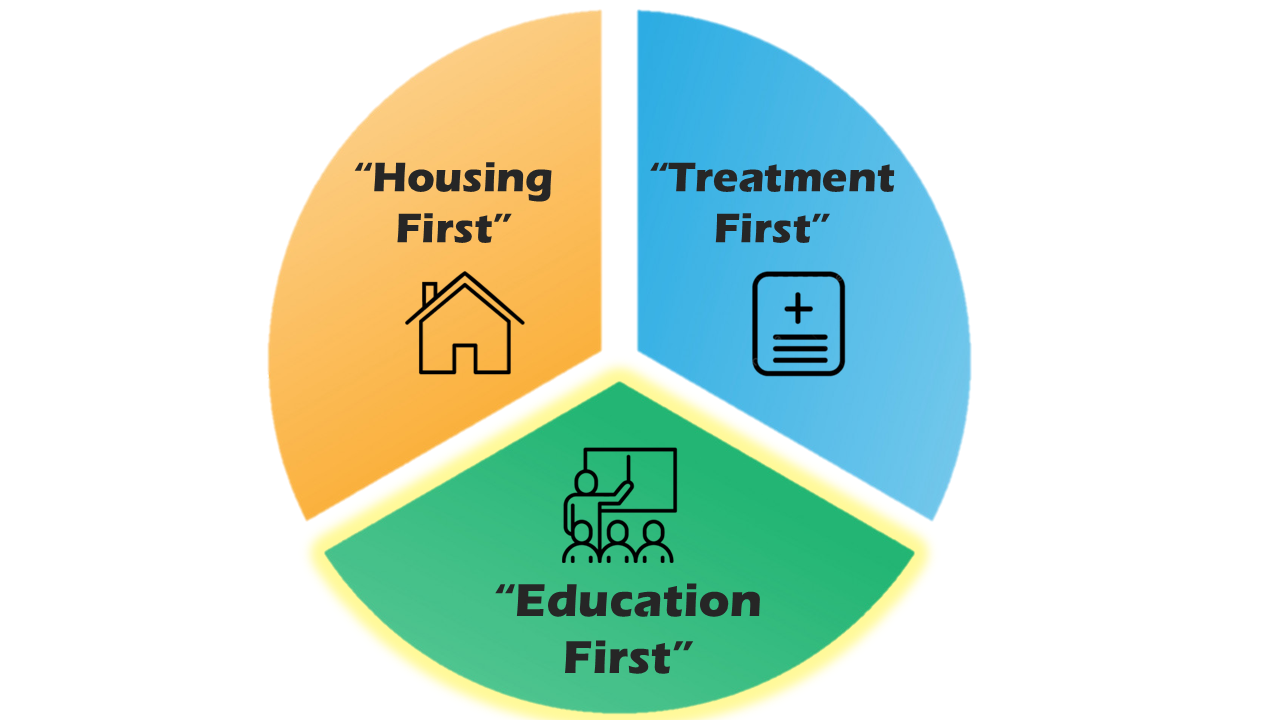
There are currently 3 perspectives to consider but only 2 of them are being discussed. One side advocates a "Housing-First" approach which puts people in housing without expectation, accountability, or mental health or addiction treatment.
Their 10 talking points include:
1. Immediate housing stability
2. Improved health outcomes
3. Reduced pressure on emergency services
4. Encourages personal responsibility & independence
5. Increased access to support services
6. Reduces long-term homelessness
7. Promotes social inclusion & community integration
8. Addresses homelessness as a "human rights issue"
9. Reduces the stigma around homelessness
10. Cost-effective in the long-run
The other side takes a "Treatment-First" approach which requires people to be sober, mentally-stable, and accountable.
Their Ten points include:
1. High initial costs
2. Potential for dependency
3. Insufficient addressing of underlying issues at play
4. Risk of property damage
5. Limited resources in high-cost areas
6. Concerns over community acceptance
7. Possible lack of structure for participants
8. Potential for program overload
9. Inconsistent success across populations
10. Dependency on long-term funding
(*See article: https://prospluscons.com/pros-and-cons-of-housing-first/)
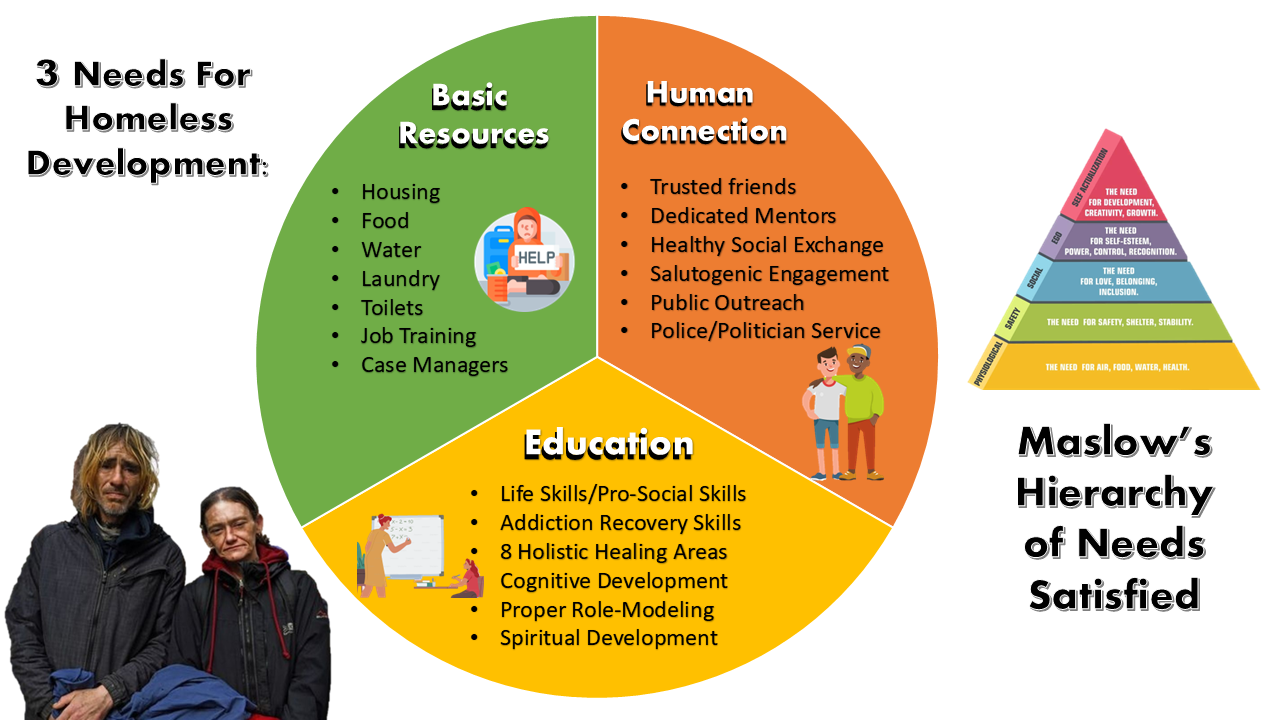
Between those two sides lies a third option that needs to be considered that focuses on education and incorporating life-skills, pro-social behaviors, self-regulation techniques, trauma-resolution, addiction-recovery principles, and a variety of counseling modalities.
A 3-Prong Approach: