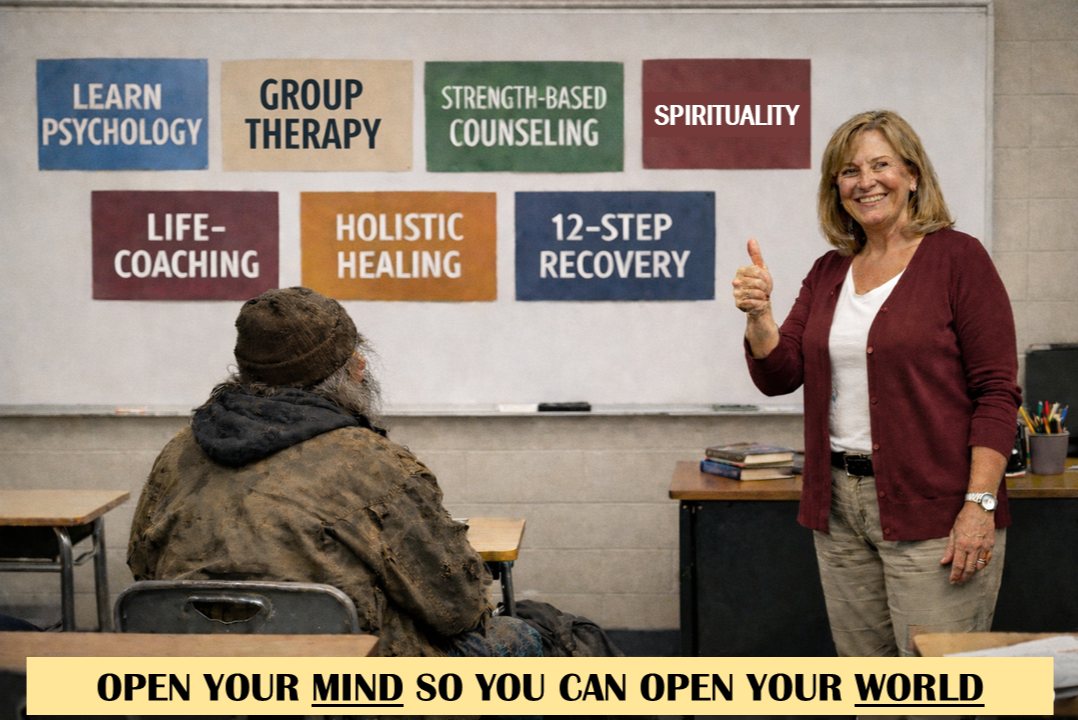
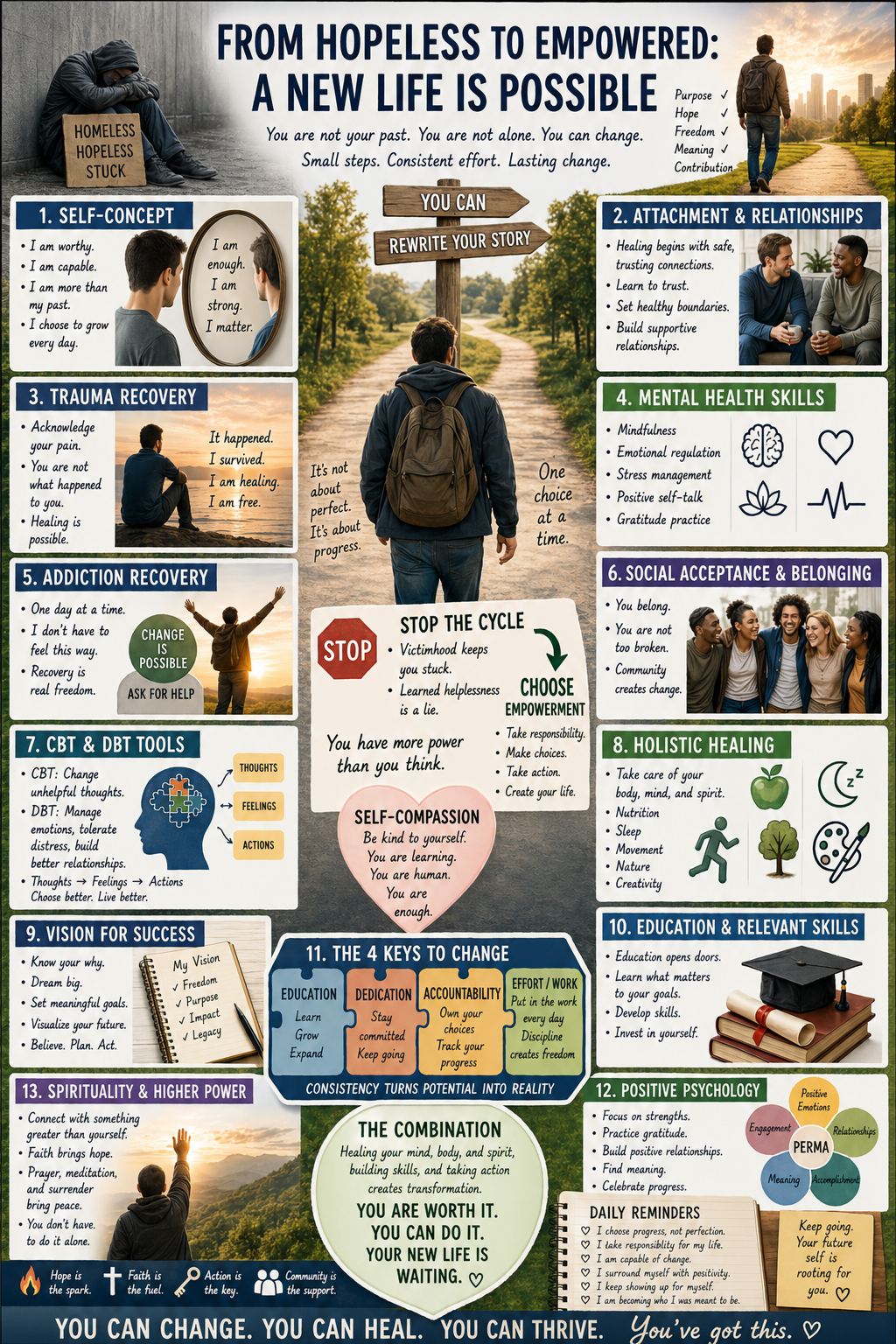
Since homelessness is both a state of mind & state of being, both perspective and circumstances must be addressed. What is true for business, academics, careers, and athletics, also applies to those at the lowest levels. Change travels across planes.
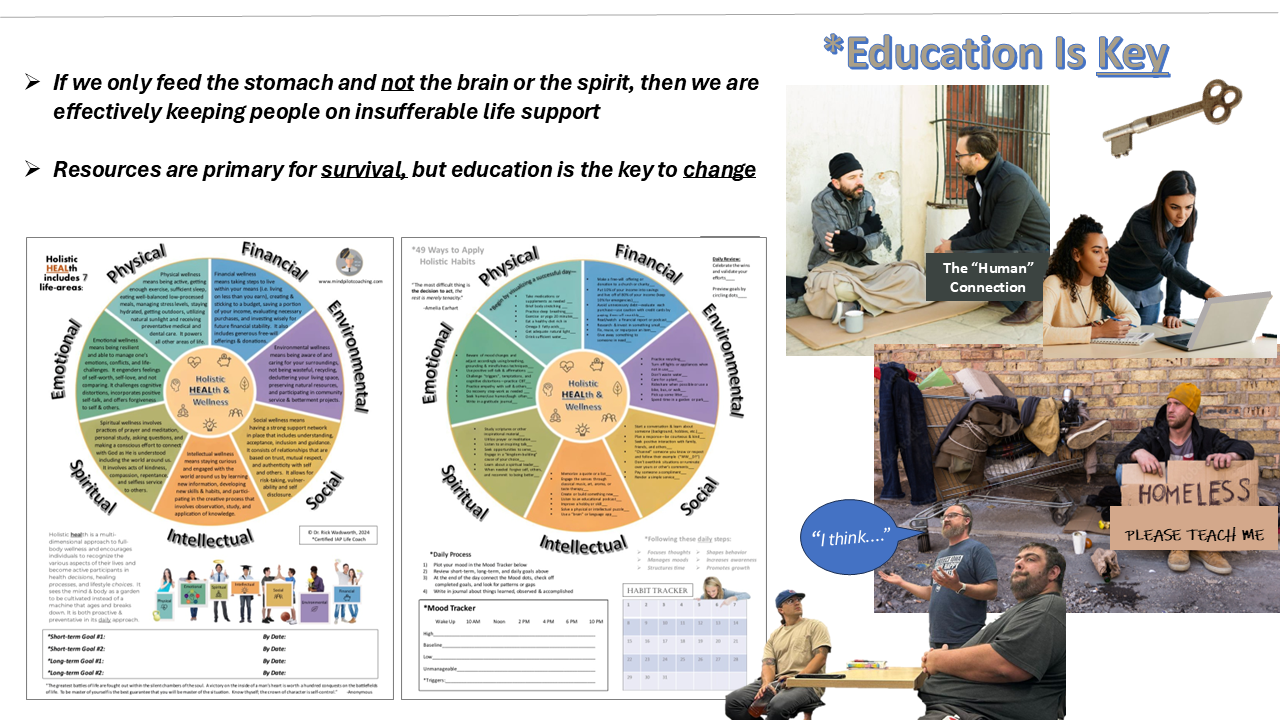
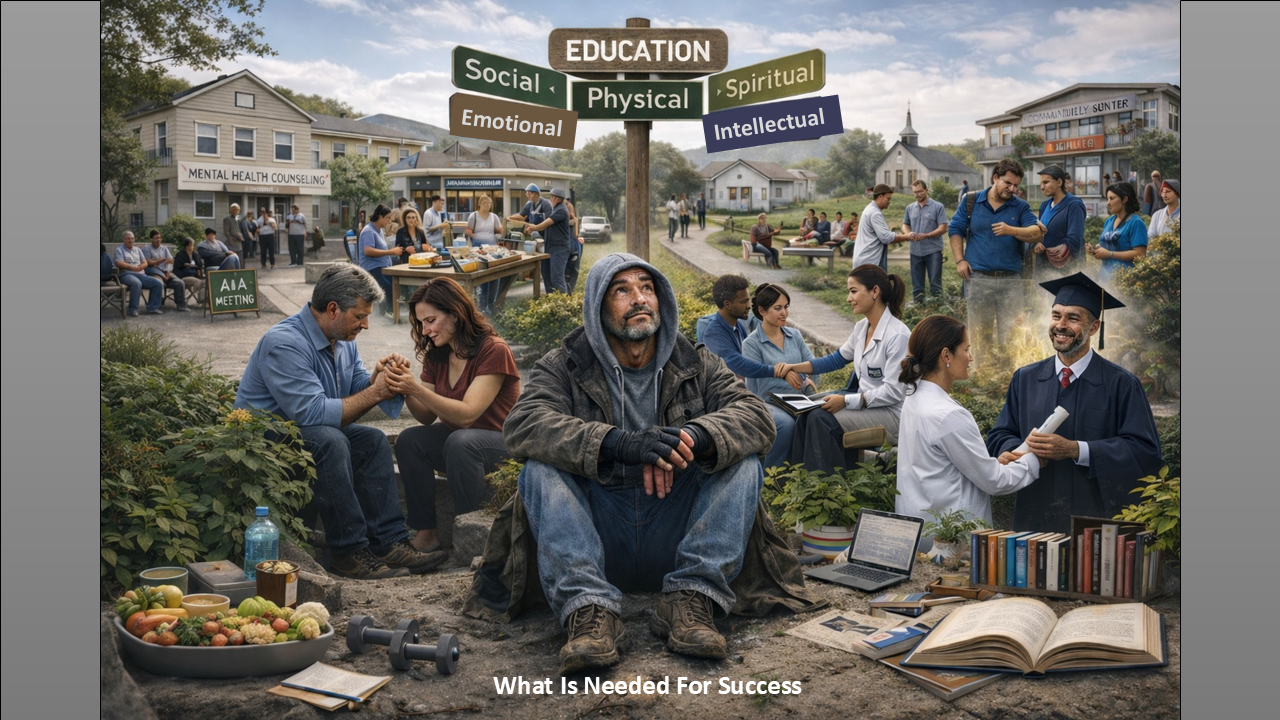
Our lives consist of 8 areas: Physical, Emotional, Spiritual, Intellectual, Social, Environmental, Financial & Occupational. Each area is a separate puzzle piece that interlocks to create a bigger whole. When one area is affected, all areas are affected. Similarly, because all 8 areas of a homeless person’s life have been radically altered, achieving any level of equilibrium is a difficult task but doable if the person wants change enough and willing to apply the principles that lead to it. Hence, education is key.
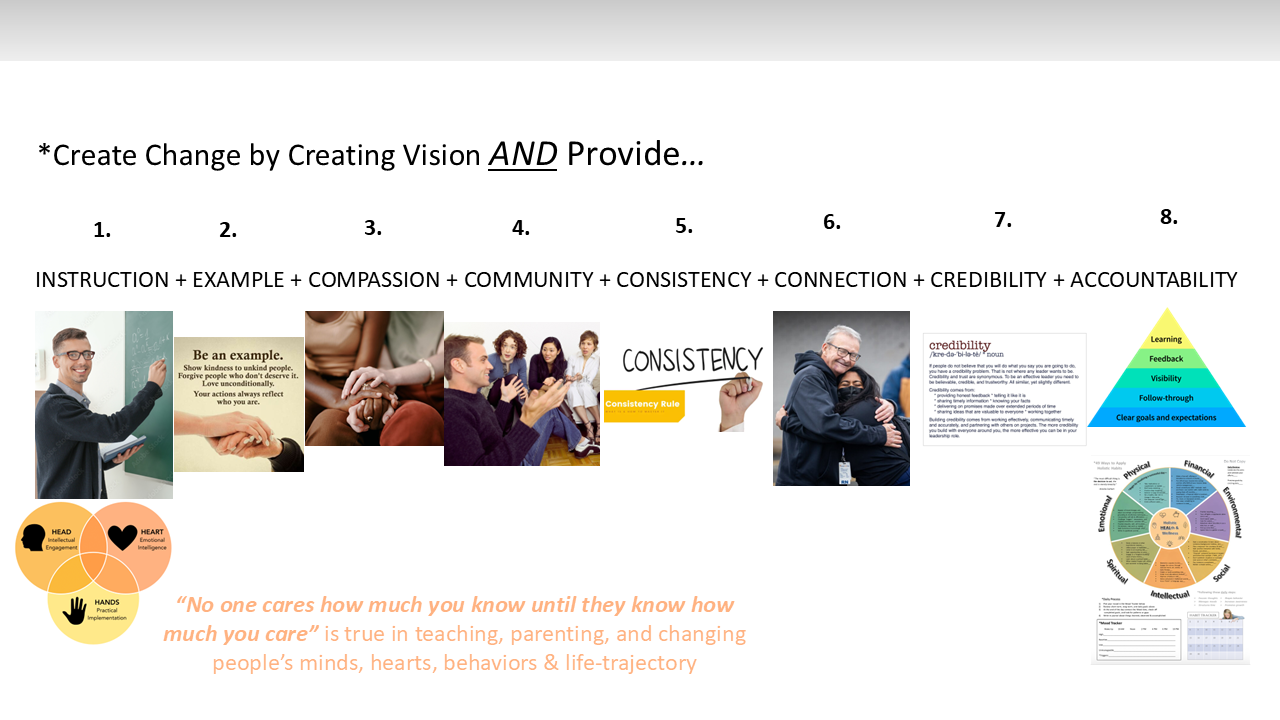
From an educational point of view, any successful learning environment needs to elevate the mind, inspire the spirit, arouse interest, spark creativity, enhance existing talent, utilize variety, lead to measured improvement, and see human-capital and potential as something to be harnessed & molded through consistent positive interaction between teacher and student. As the saying goes, “no one cares how much you know until they know how much you care” is true in the classroom, at home, on the streets, in rehab facilities, or counselor’s offices.
The more one feels loved, connected, heard, understood, and inspired, the more likely they are to listen, retain, and change. Two quotes from top educators teach the importance of connection:
“Connection is the energy that exists between people when they feel seen, heard, and valued; when they can give and receive without judgment; and when they derive sustenance and strength from the relationship.” ― Brené Brown
"No significant learning occurs without a significant relationship."― James P. Comer