Reasons For Addiction
‘Addiction’ is literally the opposite of ‘community’ because people feel stuck, isolated, ashamed, and disconnected from themselves & others and subsequently use substances (or behaviors) to escape feelings of discomfort that often stem from abuse or neglect.
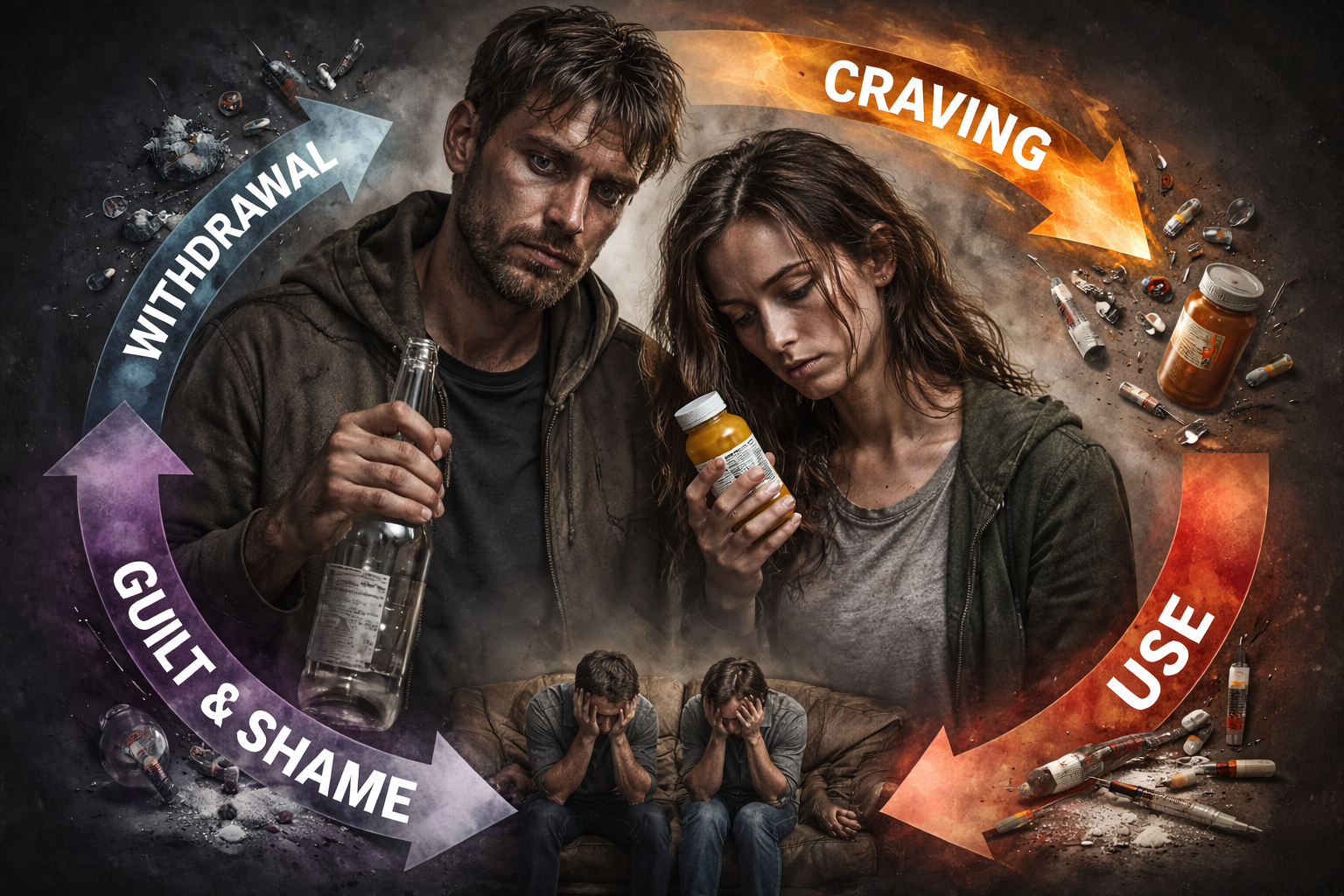
There are several reasons for addiction, and earlier experimentation leads to higher risks of problematic behaviors later on.
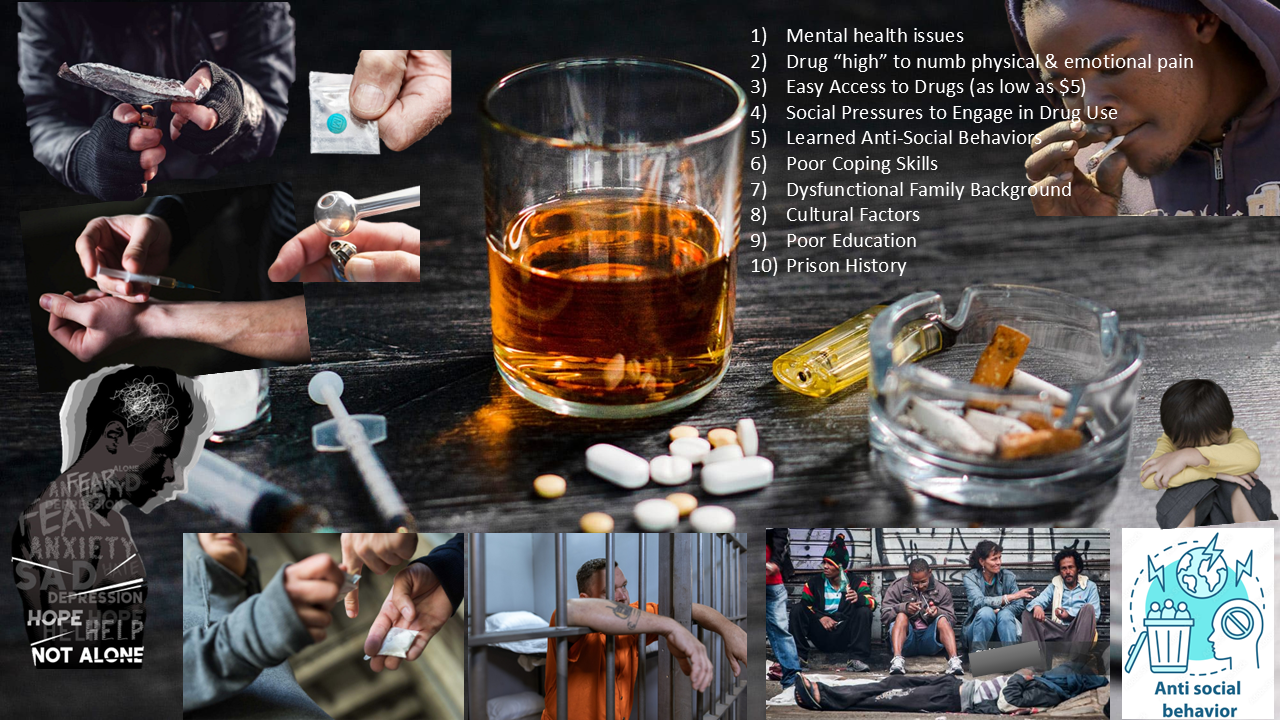
Research shows that addiction develops from a combination of biological, psychological, social & environmental factors that include:
1. Trauma and Adverse Childhood Experiences (One of the Strongest Predictors)
Many people with addiction histories report significant childhood adversity, including:
Physical abuse
Sexual abuse
Emotional abuse
Neglect
Parent incarceration
Domestic violence
Parent substance abuse
Chronic chaos or instability
Rejection or abandonment
Studies on Adverse Childhood Experiences (ACEs) show that as ACE scores increase, the risk for addiction rises dramatically. Often, the substance isn't the primary problem—it's an attempt to manage overwhelming emotional pain.
2. Genetics and Family History
Research suggests genetics account for roughly 40–60% of addiction vulnerability. A person may inherit:
Stronger reward-seeking tendencies
Greater impulsivity
Higher sensitivity to stress
Increased susceptibility to substances
Genetics load the gun; environment often pulls the trigger.
3. Mental Health Disorders
Many people use substances to cope with symptoms they don't know how to manage. Common conditions associated with addiction include:
Depression
Anxiety Disorder
Post-Traumatic Stress Disorder
Attention-Deficit/Hyperactivity Disorder
Bipolar Disorder
Social Anxiety
Chronic Stress
The problem is that the relief is temporary while the consequences accumulate.
4. Emotional Pain and Escape
Addiction often begins as a solution. People may be trying to escape:
Loneliness
Shame
Grief
Hopelessness
Failure
Rejection
Emotional numbness
Chronic stress
People don't say: "I want to become addicted." They say: "I just want the pain to stop for a little while."
5. Social Environment
Humans learn from those around them and risk factors include:
Peer pressure
Family normalization of substance use
Growing up around addiction
Gang involvement
Certain workplace cultures
Social isolation
If substance use is modeled as the primary coping strategy, it often becomes the default coping strategy.
6. Early Exposure
The younger someone begins using substances, the greater the risk of later addiction-the adolescent brain is still developing in areas responsible for:
Judgment
Impulse control
Long-term planning
This makes early substance use especially risky.
7. Chronic Stress and Poverty
Living in survival mode increases addiction risk—examples include:
Homelessness
Food insecurity
Job instability
Financial crisis
Unsafe neighborhoods
Chronic discrimination
When life feels overwhelming, immediate relief often becomes more appealing than long-term consequences.
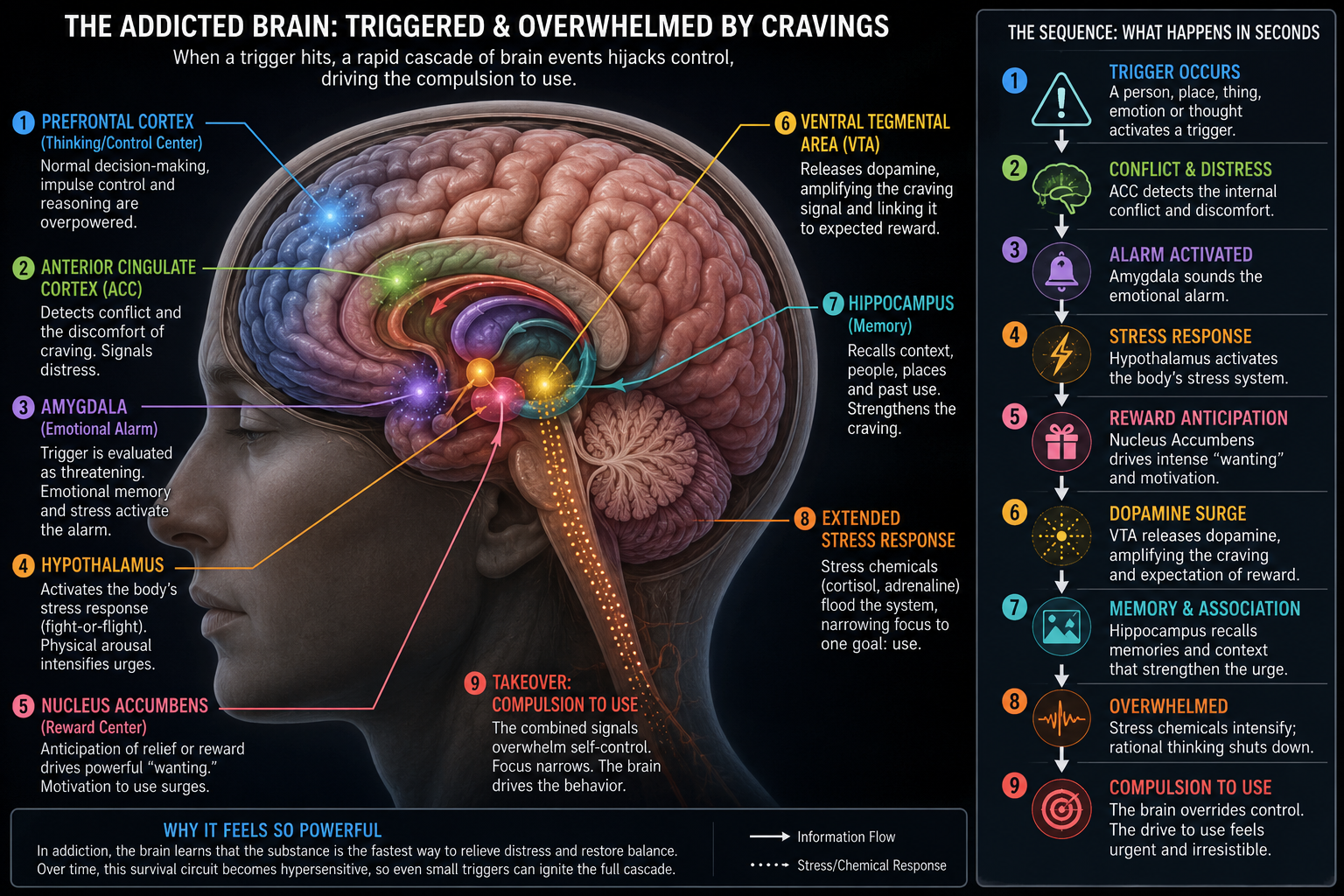
8. Brain Reward System Changes
All addictive substances and behaviors affect dopamine and reward pathways. Over time:
The brain adapts.
More of the substance is needed.
Natural pleasures become less rewarding.
Cravings increase.
Use becomes compulsive.
Eventually the person may no longer use primarily to feel good. They use to feel normal.
9. Lack of Healthy Coping Skills
Many people were never taught how to:
Regulate emotions
Manage conflict
Process grief
Handle rejection
Soothe anxiety
Build healthy relationships
Substances can become an unhealthy shortcut.
10. Loss of Meaning, Purpose, and Connection
A common theme in recovery literature is that addiction flourishes when people become disconnected from:
Meaning
Purpose
Community
Healthy relationships
Hope for the future
People are often more resilient when they feel:
Needed
Connected
Valued
Capable
Hopeful
What Addiction Looks Like For Many People:
Childhood trauma → emotional pain → anxiety/depression → loneliness → substance provides relief → increasing use → tolerance → consequences → more shame → more use.
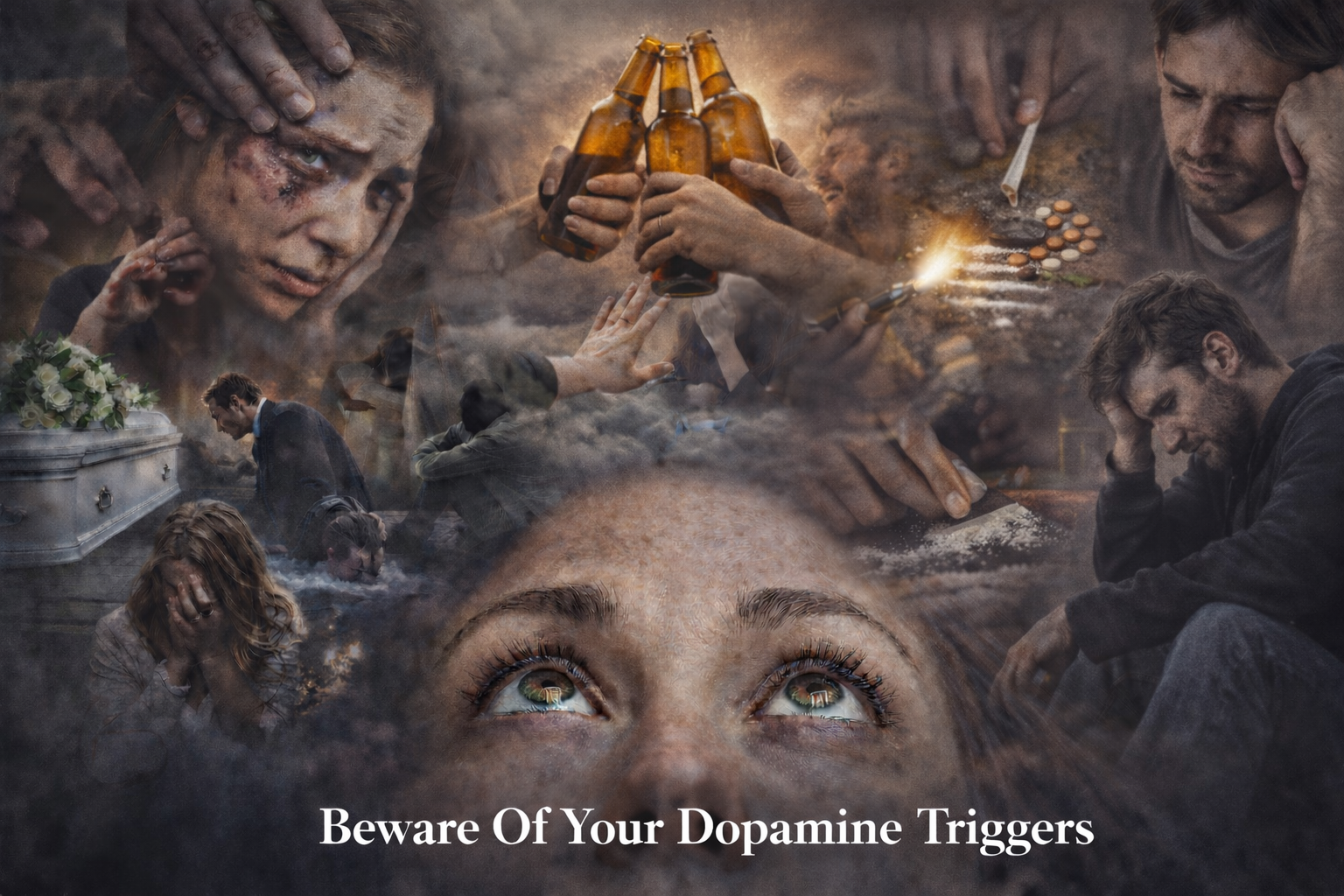
Addiction Stems From Childhood Trauma Or Unmet Needs:
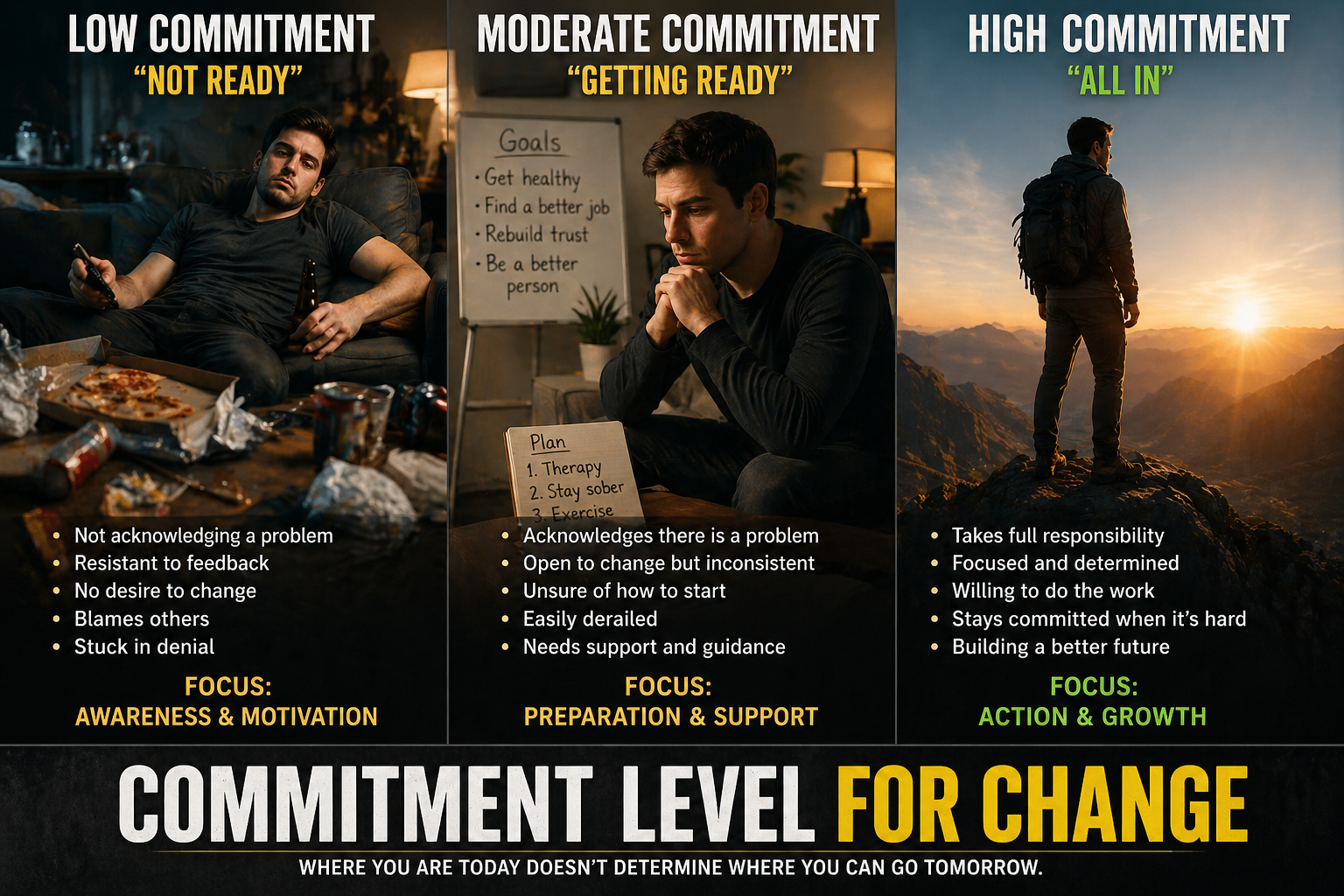
Recovery Requires 5 Things:
1) Education
2) Understanding

3) Consistency
4) Accountability
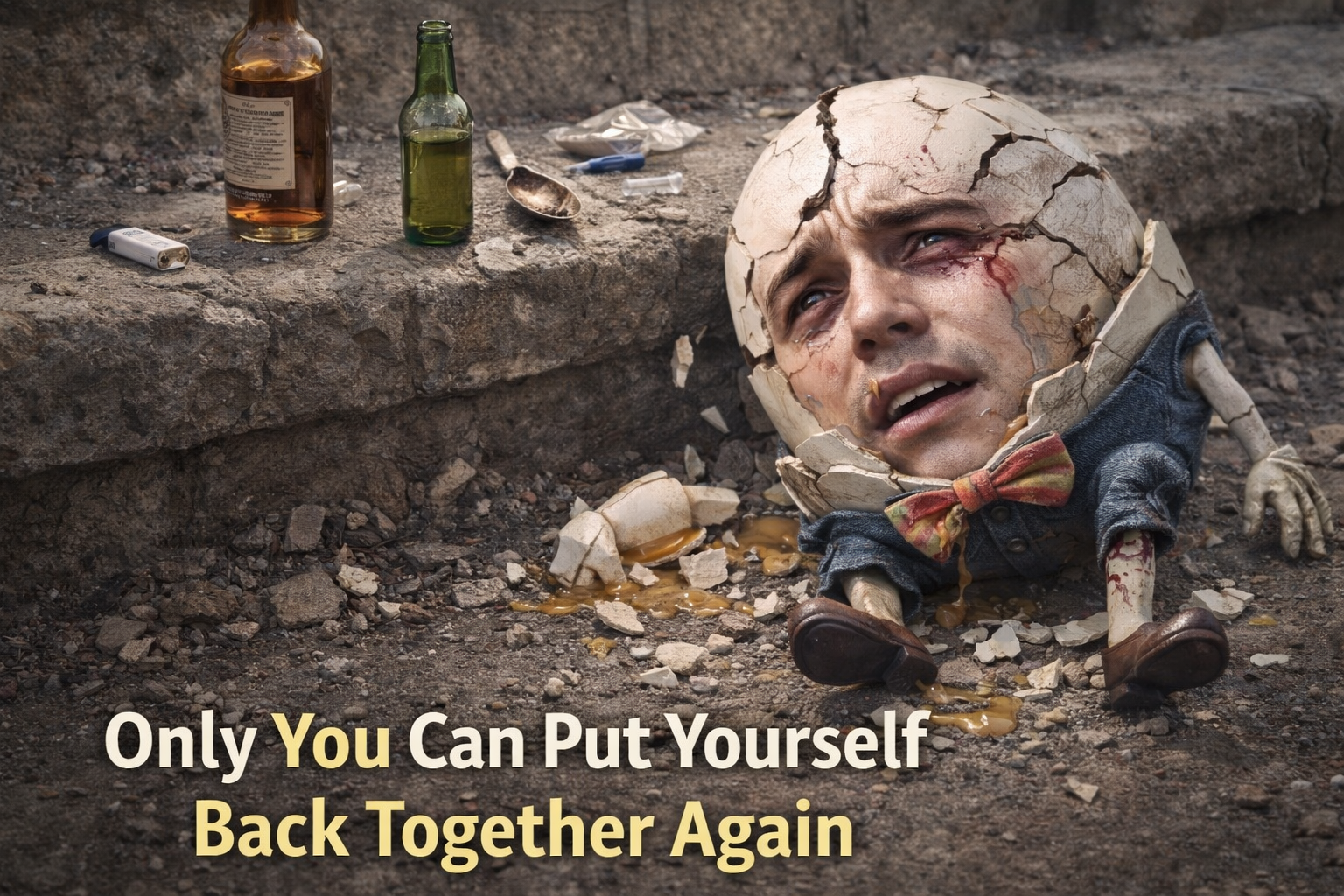
5) Support